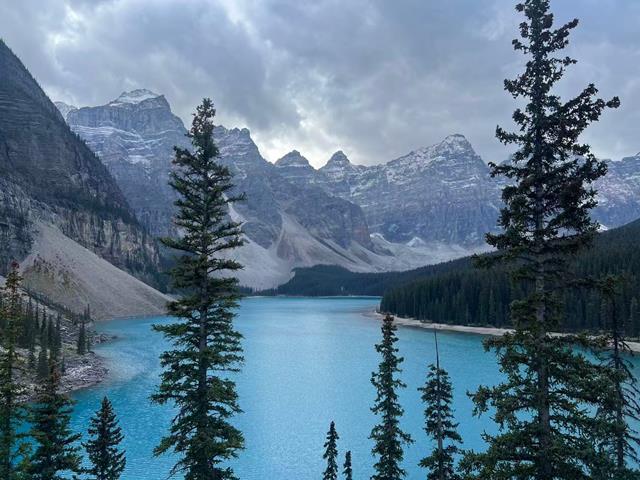
Small Group Up to 13 People|Salt Lake City Arrival & Departure + Jackson + Grand Teton National Park + Yellowstone National Park 4-Day Tour (English Tour)
$1355.94
Per Person


What To Expect
Overview
- You'll have the opportunity to see the most stunning wildlife grazing or hunting in Lamar Valley and Hayden Valley at dawn or sunset, creating unparalleled photography opportunities!
- Small groups of no more than 13 people, with free airport transfers from Salt Lake City International Airport (SLC). A top-rated tour guide will ensure your trip is complete!
- Enjoy an aerial tour aboard the Jackson Aerial Tramway, exploring Grand Teton National Park and Yellowstone National Park in-depth for a truly enjoyable experience!
- Explore Yellowstone National Park in-depth, covering all its highlights! Enjoy panoramic views of the various geothermal formations!
- You will stay for two nights at a superbly located canyon hotel within Yellowstone National Park! Recharge and prepare for your adventure!
- Enjoy free bottled water and snacks throughout the tour, ensuring you'll be able to refuel at any time! Enjoy complimentary binoculars (one per person) and witness the stunning scenery before your eyes!
- *Travel Tips: To ensure a comfortable travel experience, each passenger is only allowed to bring one piece of carry-on luggage (limited to: length 65cm * width 45cm * height 28cm or less, refer to the size of a 26-inch suitcase).
Itinerary
Day 1: Home → Salt Lake City → Pocatello
Today you'll board a flight to Salt Lake City, Utah's largest city. Our friendly and professional tour guide will contact you in advance and meet you at the airport baggage claim. We'll then transfer to Pocatello.
Complimentary airport pickup from Salt Lake City International Airport (SLC) on the day of your tour is at 2:00 PM (this is when you'll meet our staff at baggage claim after collecting your luggage). Since you need to go to the next city after the pick-up, please make sure your flight arrives at Salt Lake City International Airport (SLC) before 1:30 pm to avoid disrupting your itinerary.
Itinerary:
Home → Salt Lake City International Airport (SLC) → Pocatello
Transportation: Driving from Salt Lake City to Pocatello
Distance: 170KM
Time: 2h30m
- Best Western Pocatello Inn / La Quinta Pocatello
Day 2: Pocatello → Jackson → West Yellowstone
Antler Park
Grand Teton National Park
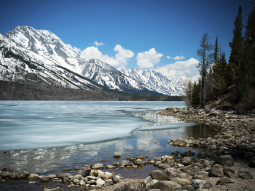
Jenny Lake
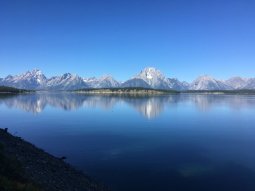
Jackson Lake Dam Observation Deck
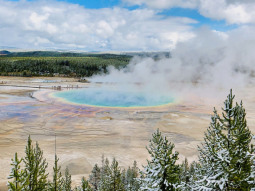
Yellowstone National Park
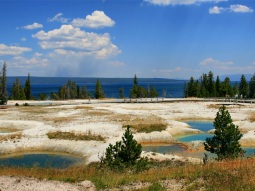
West Thumb
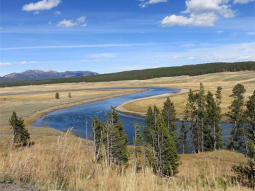
Hayden Valley
Today, we'll depart from Pocatello and drive to charming Jackson. Here, you can take in the panoramic views from the aerial tram and stroll through Jackson Town Square with Elk Antler Arches, enjoying the relaxing atmosphere. We'll then travel to Grand Teton National Park to encounter the crystal-clear Jenny Lake and admire its stunning contrast with the mountains. We'll then visit Jackson Dam Observation Deck for breathtaking views of the magnificent natural landscape. We'll then travel to Yellowstone National Park to explore the remarkable geothermal landscape of West Thumb Geyser Basin and experience the pristine expanse of Hayden Valley. Finally, we'll arrive in West Yellowstone, concluding this day's journey through natural wonders.
Itinerary:
Pocatello → Jackson → Jackson Hole Aerial Tram (Tickets included, 75 mins) → Jackson Town Square with Elk Antler Arches (75 mins, includes lunch at your own expense) → Grand Teton National Park (Tickets included, 75 mins, stops at Jenny Lake and Jackson Dam Overlook) → Yellowstone National Park (Tickets included, 65 mins, stops at West Thumb Geyser Basin and Hayden Valley) → West Yellowstone
Notes:
1. Yellowstone Park is a volcanic area, and the geothermal phenomena are surrounded by plank bridges. It takes an average of 30 minutes to walk to each attraction. Please wear comfortable shoes.
2. Yellowstone Park is located in the Rocky Mountains, about 7,000 feet above sea level. In the midsummer of July and August, the morning temperature can sometimes be as low as 4C, so please keep warm.
3. The East Gate of Yellowstone National Park is expected to open on 05/02/2026. Before that, the following attractions: Upper and Lower Falls, Artist Point, Hayden Canyon, Mud Volcano, Fishing Bridge, and West Thumb Geyser are not available for visit. Please understand.
4. The South Gate of Yellowstone National Park is expected to open on 05/10/2026. Therefore, West Thumb Geyser is still not available for visit from 05/02/2026 to 05/09/2026. Please understand.
*As the itinerary includes a visit to a national park on the day of the trip, to ensure your experience and considering factors such as travel time, road conditions, and visitor volume, the departure and return times on the day of the trip will be subject to the tour guide's actual arrangements.
Transportation: Driving from Pocatello to Jackson
Distance: 150KM
Time: 2h30m
Jackson Hole Aerial Tram
A 10-minute ride on the Jackson Hole Sky Tramway takes you to a height of 4,139 feet, a journey like a journey through the clouds. Upon reaching the summit, you'll enjoy breathtaking 360-degree views of the Teton Range, Jackson Hole Valley, and the surrounding mountains. As the ride continues, the scenery becomes more breathtaking with each second. Once you reach the summit, you'll feel like you're on top of the world!
Jackson Town Square with Elk Antler Arches
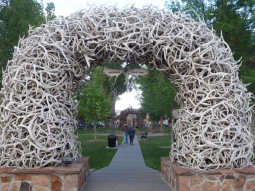
The park is not big, but there are giant arches made of deer antlers in the four directions of east, west, south and north. The antlers are all sharp, but they are not obtained by hunting. Every winter, a large number of elk come from the mountains to the "National Elk Refuge" in Jackson to spend the winter. In the spring, the antlers fall off naturally and are replaced. After the elk leave, countless treasures are left everywhere.
Transportation: Drive from Jackson to Grand Teton National Park
Distance: 30KM
Time: 40m
Grand Teton National Park
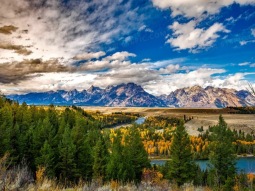
Grand Teton National Park was established on February 26, 1929. There are 300 kilometers of trails in Grand Teton National Park. There are many lakes in the park, including Jackson Lake and Jenny Lake. Most of the area of Grand Teton National Park is located in the Rocky Mountains, and the natural scenery is very magnificent. In addition, Grand Teton National Park also has extremely rich biological resources, including American bison, grizzly bears, black bears, moose, etc.
Jenny Lake
Jenny Lake is located in Grand Teton National Park, Wyoming, USA. The lake was formed approximately 12,000 years ago when glaciers pushed rock debris into the Cascades Canyon during the Last Glacial Maximum, creating the terminal moraine that now blocks the lake. The lake is estimated to be 256 feet deep and covers 1,191 acres. Jenny Lake is one of the most visited areas in Grand Teton National Park. Nestled at the foot of the Teton Mountains, it is the heart of the park. From its east shore, visitors can overlook Mount Tevinot, Mount St. John, and the Cascades Canyon. From its west shore, visitors can gaze back across the lake towards the Jackson Hole Valley.
Jackson Lake Dam Overlook
Jackson Lake is a 400-foot-deep natural lake with a dam built on top. The original woodpile dam, built in 1906-07, failed in 1910. In 1916, the Bureau of Reclamation built a concrete dam, raising the lake level by 39 feet. The rising waters flooded the surrounding forest, killing many trees. During the Great Depression, young men from the Civilian Conservation Corps helped clear the shores of Jackson Lake and burn the woodpile. Today, you can enjoy beautiful views of Jackson Lake from the Jackson Lake Dam Overlook.
Transportation: Drive from Grand Teton National Park to Yellowstone National Park
Distance: 30KM
Time: 40m
Yellowstone National Park
Located in the Rocky Mountains, known as the "backbone of America", it is located on the lava plateau between the Northern Rockies and the Central Rockies in the western United States. The geothermal wonders are its hallmark, a primitive landscape of the earth forged by water and fire. The natural landscape in the park is divided into five major areas, namely the Mammoth Area, the Roosevelt Area, the Canyon Area, the Geyser Area and the Lake Area, each with its own characteristics. It exceeds the limits of human art and is the most wonderful and spectacular scenery on the surface of the earth.
West Thumb Geyser Basin
The West Thumb Geyser Basin, located on the edge of Yellowstone Lake, was formed 150,000 years ago by the collapse of the earth's crust. The combination of hot springs and lake water has created a wonderful misty landscape: the misty area is the steam of hot springs, and the green waves are the water of Yellowstone Lake, which complements the blue sky and white clouds in the background, forming a landscape different from other hot spring areas in Yellowstone. This area is equivalent to the bay of Yellowstone Lake, where many geysers gather. The colors of the water outlets vary, some are transparent green, and some are dark black like cement. Many water outlets present a beautiful fantasy.
Hayden Valley
Hayden Valley is located on the edge of the Yellowstone crater. It is an open grassland with relatively little geothermal activity. Because of the river passing through it, the grass and water are lush, so it is one of the areas with more wild animals in Yellowstone Park. The main animals are bison, elk, black bears, brown bears and coyotes. Wild ducks, pelicans and other birds can often be seen in the Yellowstone River. There are viewing points on the roadside, and many tourists often use binoculars to watch animals.
- Canyon Lodge & Cabins
Day 3: Yellowstone National Park In-Depth Tour
Yellowstone National Park
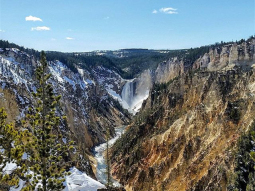
Artist Point
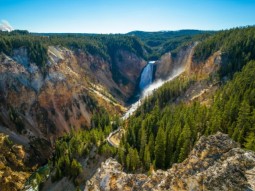
Upper Yellowstone Falls
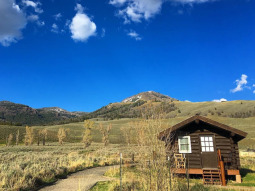
Lamar Valley
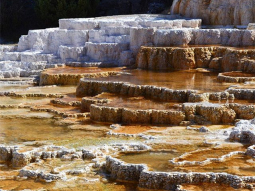
Mammoth Hot Spring
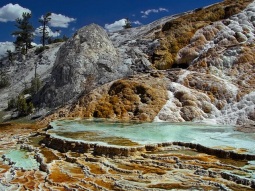
Palette Spring
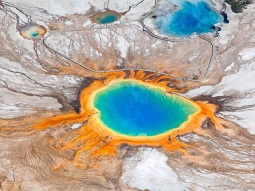
Grand Prismatic Spring
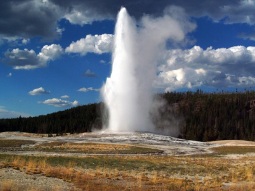
Old Faithful Geyser
We'll spend a full day marveling at the wonder and beauty of Yellowstone. Nature's gifts are on full display here. Nestled within the crater of the largest active supervolcano, Yellowstone boasts over 10,000 geothermal features and over 200 waterfalls. Its unique ecosystem nurtures one of North America's finest wildlife habitats, home to over 60 mammal species and over 1,100 native plant species. Nature has shaped Yellowstone into a vibrant landscape. Witness mist-shrouded canyons, galloping waterfalls, vibrant hot springs, buffalo and deer roaming the grasslands, and waterfowl nestling by the water's edge. Yellowstone is home to wildlife, a masterpiece etched in the brush of painters, a lyric sung by poets, the eyes of a lover, and the heart of nature. Words are often insufficient to describe Yellowstone's beauty; we can only capture and capture its captivating beauty with our own eyes and cameras.
Itinerary:
Yellowstone National Park (Tickets included, 7 hours, visiting Artist Point, Upper Falls, Tower Falls, Lamar Valley, Mammoth Hot Springs, Fountain Paint Pots, Grand Prismatic Springs, Old Faithful Geyser, Old Faithful Lodge, and other attractions. Tour guide availability may vary based on availability on the day. Please refer to the actual schedule for details.) → West Yellowstone
Notes:
1. The East Gate of Yellowstone National Park is expected to open on May 2, 2026. Prior to this date, the following attractions: Upper and Lower Falls, Artist Point, Hayden Canyon, Mud Volcano, Fishing Bridge, and West Thumb Geyser will be unavailable.
2. The South Gate of Yellowstone National Park is expected to open on May 10, 2026. Therefore, West Thumb Geyser will remain unavailable from May 2, 2026, to May 9, 2026.
Yellowstone National Park
Located in the Rocky Mountains, known as the "backbone of America", it is located on the lava plateau between the Northern Rockies and the Central Rockies in the western United States. The geothermal wonders are its hallmark, a primitive landscape of the earth forged by water and fire. The natural landscape in the park is divided into five major areas, namely the Mammoth Area, the Roosevelt Area, the Canyon Area, the Geyser Area and the Lake Area, each with its own characteristics. It exceeds the limits of human art and is the most wonderful and spectacular scenery on the surface of the earth.
Artist Point
The scenery here is particularly spectacular. The canyon is more than 300 feet deep. The canyon walls are mainly yellow, mixed with black, red and pink, and clusters of green pine trees. These colors are mixed but not chaotic, looking like a peacock's tail, and also like the pointillism of a romantic painter who applied several layers of color in the same place.
Upper Yellowstone Falls
The Upper Falls is located 400 meters upstream of the larger Yellowstone Falls. The waterfall falls vertically along the volcanic cliff with a drop of 33 meters. The originally uneven volcanic rocks below the waterfall have been eroded by the waterfall for hundreds of years and have become very smooth.
Lamar Valley
No other destination in Yellowstone gives you a greater opportunity to see wild bison than Lamar Valley. The Lamar River feeds a wide grassy valley, drawing the massive grazers to the northeast corner of Yellowstone National Park. In addition to bison, Lamar Valley is also renown for its gray wolf population. These crafty creatures are harder to spot than the big bison, but you’ll have a better chance of spotting one around sunrise and sunset.In addition to bison and wolves, you can see elk, pronghorns, and even grizzlies in Lamar Valley. Fishing in the Lamar River is another popular activity in Lamar Valley.
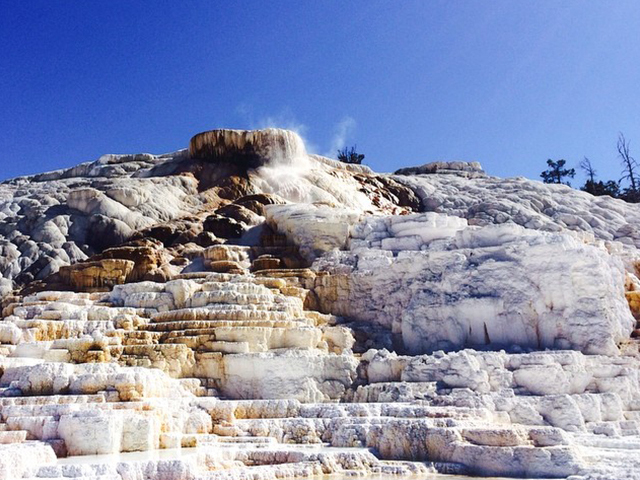
Yellowstone Mammoth Hot Springs
There were originally several hot springs flowing down the hillside, and the hillside was dyed colorful by the microorganisms in the spring water, forming a colorful large staircase. However, due to a crustal movement in 2002, most of the hot springs here are no longer active. The microorganisms turned into grayish white powder after death, which remained on the dry large staircase, reflecting the dazzling sunlight, turning this place into a solemn and barren land. With the movement of the crust, a place that was once very active may suddenly become quiet; a place that was originally unknown may also become a sensation.
Fountain Paint Pots
The Palette Geyser is a mud spring, a type of acidic hot spring containing limited water. Underground acidic gases and microorganisms break down the rocks surrounding the pores into clay and volcanic mud. Like boiling water bubbling mud, the thicker the mud, the higher the steam pressure underneath, and the greater the eruption. The Palette Geyser displays colors such as pale pink, milky white, and cyan due to the different minerals released from the rocks, and its bubbling appearance is further enhanced by geothermal activity. Its circumference is approximately 20 meters, and it is surrounded by railings to prevent visitors from getting too close and potentially causing danger.
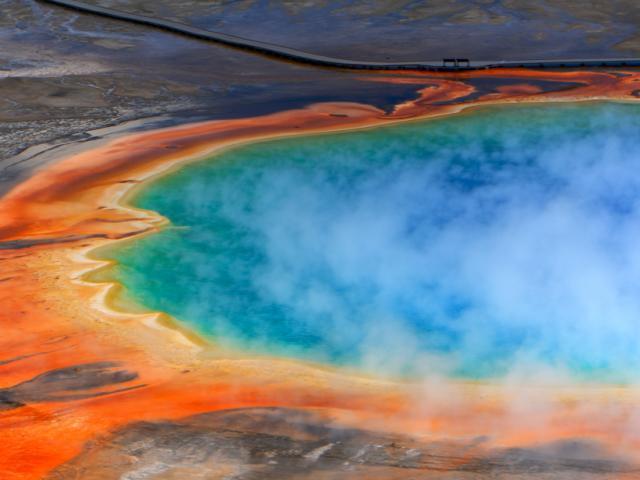
The Grand Prismatic Hot Spring
Also known as the Seven Color Pool, it is the largest hot spring in the United States and the third largest in the world. It is 75-91 meters wide and 49 meters deep, and it gushes out about 2,000 liters of 71-degree hot water every minute. The amazing thing about the Grand Prismatic Spring is that the color of the lake changes with the seasons. In spring, the lake changes from emerald green to golden orange-red, which is due to the algae and pigment-containing bacteria and other microorganisms living in the mineral-rich water. In midsummer, the chlorophyll content is relatively low, so the lake water appears brilliant orange, red or yellow. But in the cold winter, due to the lack of light, these microorganisms will produce more chlorophyll to suppress the color of carotenoids, so the water will appear deep dark green.
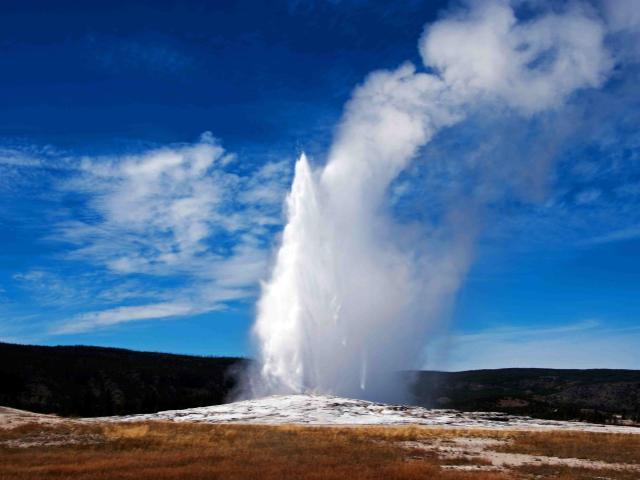
Old Faithful Geyser
Old Faithful geyser is named for its consistent and regular eruption. Currently, it erupts approximately every 60 to 110 minutes, and each eruption lasts four to five minutes. The water column is more than 40 meters high, which is spectacular and never stops. The Old Faithful Visitor Center will display the eruption schedule in advance, so you can check the eruption time in advance before visiting with confidence.
- Canyon Lodge & Cabins
Day 4: Yellowstone National Park → Yellowstone Bear World → Salt Lake City
Yellowstone National Park
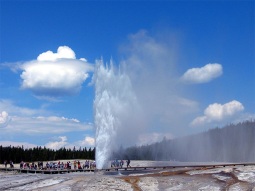
Norris Geyser Basin
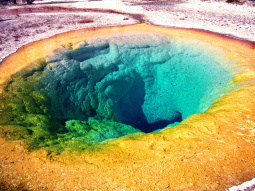
Morning Glory Pool
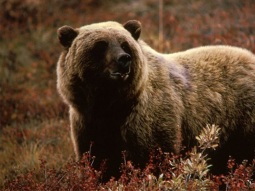
Yellowstone Bear World
While you're still reveling in the wonders of yesterday's exciting tour, this morning we'll continue our journey to experience the stunning beauty of the Greater Yellowstone Ecosystem! Surrounded by blue skies and forests, with winding rivers flowing through, it feels like a fairyland! While enjoying this idyllic scenery, you can also enjoy a leisurely hike through the national park! After fully absorbing the magnificent natural landscape, we'll bid farewell to Yellowstone National Park. Next, at Yellowstone Bear World, you can get up close and personal with the diverse wildlife native to the Greater Yellowstone Ecosystem. This is also the only wildlife park in the United States where visitors can bottle-feed bear cubs. We'll then return to Salt Lake City, concluding this wonderful trip.
Itinerary:
Yellowstone National Park (Tickets included, 1.5 hours, stops at Norris Geyser Basin, Morning Glory Pool, and Geyser Basin. Tour schedule may vary depending on the day's availability, so please refer to the actual itinerary) → West Yellowstone (60 mins, including lunch at your own expense) → Yellowstone Bear World (Tickets included, 75 mins) → Salt Lake City
Yellowstone National Park
Located in the Rocky Mountains, known as the "backbone of America", it is located on the lava plateau between the Northern Rockies and the Central Rockies in the western United States. The geothermal wonders are its hallmark, a primitive landscape of the earth forged by water and fire. The natural landscape in the park is divided into five major areas, namely the Mammoth Area, the Roosevelt Area, the Canyon Area, the Geyser Area and the Lake Area, each with its own characteristics. It exceeds the limits of human art and is the most wonderful and spectacular scenery on the surface of the earth.
Yellowstone Norris Geyser Basin
Norris Geyser Basin, named after an early Yellowstone Superintendent, may be the hottest geyser basin in Yellowstone. The stark, barren landscape of Porcelain Basin is the result of the acidic environment. Due to the hostile condition plants, algae and bacteria have difficulty in establishing themselves. Instead, the basin derives its colors from mineral oxides, in spectrums of pink, red, orange (iron oxides) and yellow (sulfur and iron sulfates). The largest geyser in the world is located here. Steamboat Geyser has long periods of dormancy, but when it does erupt it sends jets of water nearly 380 feet high in a spectacular display.
Morning Glory Pool
The Morning Glory Pond exhibits a variety of colors due to the thermophilic bacteria living within it. Decades ago, the pond displayed a unique blue hue. However, as tourists frequently tossed coins into the pond for good luck, debris clogged the spring's source, lowering the water temperature and leading to the proliferation of various bacteria and algae. Currently, the central part of the pond is green, surrounded by a yellow hue. The water is emerald green, crystal clear, and edged with orange-yellow rims. The spring water contains various metal ions, which, under low-angle light, make the clear water appear even more azure, and the golden-yellow outer edge even more vibrant, resembling a blooming morning glory flower. Hence, it is named the Morning Glory Pond.
Transportation: Drive from West Yellowstone to Yellowstone Bear World
Distance: 90KM
Time: 1h30m
Yellowstone Bear World
Yellowstone Park Bear World is located in Rexburg, Idaho. It was built in 1998 and is the only wildlife sanctuary in Greater Yellowstone that can be driven through. The park offers rare animals for visitors to see, such as grizzly bears, black bears, gray wolves and other precious North American animals. It is said that there are nearly 100 grizzly bears. There are also shops, tour guides and performances such as feeding bears and other small animals.
Transportation: Drive from Yellowstone Bear World to Salt Lake City
Distance: 240KM
Time: 3h30m
Airport transfer information:
Salt Lake City International Airport (SLC), please book domestic flights departing after 8:30 PM and international flights departing after 9:30 PM.
Packages
Package
Single Room
$2490.54$2678Double Room
$1755.84$1888Triple Room
$1560.54$1678Quad Room
$1355.94$1458Child
Same as Adult
Pick Up/Drop Off Information
Pick Up
| Location | Time | Address |
| Salt Lake City International Airport (SLC),W Terminal Dr, Salt Lake City, UT 84122 Free pick-up time is 14:00. | 14:00 | Salt Lake City International Airport (SLC),W Terminal Dr, Salt Lake City, UT 84122 |
Drop Off
| Location | Time | Address |
| Salt Lake City International Airport (SLC),W Terminal Dr, Salt Lake City, UT 84122 Please book domestic flights departing after 20:30 or international flights departing after 21:30 that evening. The tour guide will arrange for you to take the shuttle or Uber or hotel shuttle to the airport. | Salt Lake City International Airport (SLC),W Terminal Dr, Salt Lake City, UT 84122 |
Things to Know
Included/Exclude
- Professional tour vehicle;
- English-speaking staff (driver/guide/driver-guide) and service fee;
- Entrance fees to attractions listed in the itinerary: Jackson Hole Tramway, Grand Teton National Park, Yellowstone National Park, Yellowstone Bear World;
- Hotel accommodations as included in the itinerary;
- Hot breakfast on days 2-4 of the itinerary;
- Bottled water, snacks, and binoculars.
- Lunch and dinner;
- Transportation to and from the departure point;
- Personal expenses (e.g., meals, phone calls, pay TV, etc.);
- Any other expenses not listed in the price inclusions.
Booking and Confirmation Process
- Due to high demand, inventory is mostly synchronous but sometimes not. Our consultant will check real time availability onsite and confirm seats.
- You will receive your booking information instantly via email. In the event that you do not receive our email, please check your spam folder, or log into your User Center to check your order status and download your voucher when available.
How To Use
- 05/28/2026-10/16/2026: Thursday and Friday
Minimum of 2 guests is required to be operated.
Terms & Conditions
What is the cancellation policy?
Cancellation Period
Policy
What if you miss the appointed time or departure date?
Once the booking is confirmed, an absence or failure to show up on the scheduled date or time is a no-show. No refunds or reschedules will be issued for no-shows and late arrivals.
Other important information
- Minors under 18 must be accompanied by an adult in the group; unaccompanied minors are not allowed to join the tour.
- Please provide accurate and complete personal information when booking, including full name, gender, valid contact details to avoid travel issues.
- Hotel arrangements subject to availability; check-in usually after 3 PM. Each room accommodates max 2-4 people including adults and children.
- Group members must purchase unified tickets for attractions; personal tickets or CityPass usage are not allowed; ticket and meal fees subject to official changes on the travel day.
- Due to rising fuel costs, an additional transportation surcharge of USD $5 per person per day applies from May 18, 2026; collected by the guide during the tour.
- To ensure smooth operation, visitors must strictly adhere to meeting times; vehicles will depart if delayed more than 10 minutes.
- Delays or additional costs caused by uncontrollable factors such as weather, traffic, flight delays, strikes, government shutdowns, warfare, or terrorism are at the visitor’s own expense.
- If attractions or parks are temporarily closed for holidays or other reasons, substitutes or itinerary adjustments will be made to ensure smooth travel.
- No pets or animals allowed to participate in the group tour.
- Only one airport pick-up and drop-off service is provided; guests bear any extra costs caused by weather or flight delays.
- During pandemic control, park staff may verify visitor identity; non-U.S. residents should carry valid identification such as passport, driver’s license, or green card.
- Comfortable vehicles provided; each guest is limited to one carry-on luggage meeting airport size requirements (max 65cm x 45cm x 28cm).



![[Small Group Tour for up to 12 People] USA Thousand Islands + Niagara Falls 3-Day Tour (1-Night Stay at Falls View Hotel)](https://cdn.wannar.com/scenics_images/68/68-1_640x480.jpg?x-oss-process=image/resize,m_fill,h_480,w_640,limit_0)